allan brown - britain's unluckiest footballer
By Will Foster
Where is Allan Brown? That was the question being asked at
East Fife in the summer of 1950. Not even Allan’s wife appeared sure. He had
left for home from the south of England the previous morning, where he was
looking for a new club, but had not yet arrived. ‘I do not know what to think,’
she told reporters, ‘he was not interested in Bogota and anyway I do not think
I would go there at the moment with two young children.’
The Bogota reference was in relation to the short lived
trend of British players heading to Colombian sides Millionarios and Santa Fe,
who were offering wages ten times that which could be earned in England. That
it was even under discussion shows the lengths to which Allan was desperate to
leave East Fife. He had made it clear he wouldn’t sign a new contract and the
empasse turned bitter over the next few months, at a time when clubs held a
players registration until an acceptable offer was received from another club.
It was a sad end to a successful spell at Bayview Park for
Allan where, under the management of Scot Symon, he had helped East Fife reach
the First Division and to a Scottish Cup final against Rangers in April 1950,
though they were defeated 3-0. He had joined the Methil side from Kennoway
Hearts in 1944 as a 17-year-old and marked himself out as a quick, powerful
forward. Indeed such was his pace that he would often take part in sprint
events at Highland Games.
With the contract dispute continuing as 1950 wore on, he
even threatened to give up playing altogether and join Croydon Rovers as a
coach for £15 a week. Fortunately that point was never reached. Instead, amid
interest from Portsmouth, Glasgow Rangers and most notably Liverpool, who made
East Fife multiple offers, he signed for Blackpool in December for what was
then a record fee of £25,000 for the Seasiders.
This was a Blackpool side teeming with household names such
as Stan Mortensen, Stanley Matthews and fellow Scot Jackie Mudie, and it was
among that lofty company that Brown made his debut at Charlton two days before
Christmas as Blackpool ran out 3-2 winners.
He would remain an almost constant presence in that famous
forward line for the next couple of seasons, scoring regularly and winning the
majority of his 14 caps for Scotland, but he would also gain the title as
‘Britain’s unluckiest footballer’. An injury suffered at Huddersfield in April
1951 caused him to miss the FA Cup Final against Newcastle, but worse was to
come two years later when he suffered an awful leg break in the FA Cup
Quarter-Final at Arsenal.
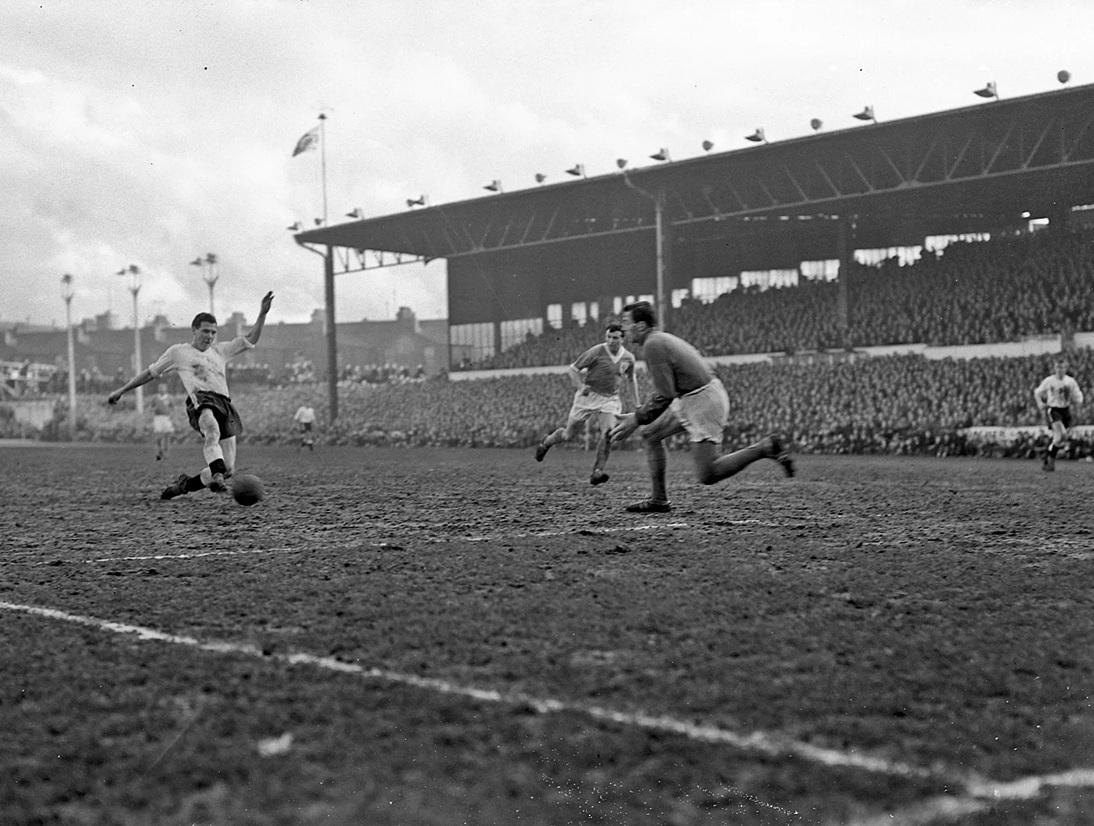
With the game poised at 1-1 in the dying moments, Brown saw
his chance to win the tie. ‘I slipped through the Arsenal’s defence and hit my
shot just before (Arsenal ‘keeper) Jack Kelsey came out and collided with me.
The ball went into the back of the net….and I went off to hospital with a
broken leg.’ It would all mean that Brown would miss perhaps the most famous FA
Cup Final of them all, Blackpool’s 4-3 win against Bolton Wanderers, aka ‘The
Matthews Final’.
From that point he struggled, through both loss of form and
injuries, to hold down his place at Bloomfield Road. Many clubs were interested
in his signature including Sunderland, who were not afraid of splashing out on
transfers at the time, but it was Dally Duncan who won the race in February
1957, signing the Scot for around £14,000 in a deal that was seen a big coup
for Luton.
The feeling within the club was the Brown, now 30, could do
a similar job as Jessie Pye had done previously, bringing nous and experience
to Kenilworth Road and getting the best out of those around him. The Hatters
had finished a comfortable 10th in their first season in the top flight but the
second was proving rather more difficult, and they were hovering around the
relegation zone when Brown made his debut against Leeds.
The move certainly paid early dividends. Allan would score
on his debut in a 2-1 win at Elland Road before taking part in a 4-1 thumping
of Newcastle. Even better would follow two games later at Highbury against
Arsenal. With Town trailing 1-0 at half-time, the decision was made to move
Brown to centre-forward, and he responded with two goals as Luton came back to
win 3-1. ‘Scottish selectors will be delighted to hear that Brown is back to
his best,’ roared the Daily Post the following day. For the Hatters it meant a
third win in four, and was surely sweeter for Brown having come at the ground
where he’d suffered his broken leg.
Brown would continue to show his class the following year, scoring 13 times in 37 appearances as the Hatters fared even better against the ‘giants’ of the 1st Division, hitting top spot after a win against Brown’s old side Blackpool in August and finishing 8th, the highest the club had ever managed in the pyramid at the time. But in many regards an even more remarkable season would follow. One in which all eyes turned to the FA Cup and where Brown would get the chance, finally, to appear in England’s showpiece event.
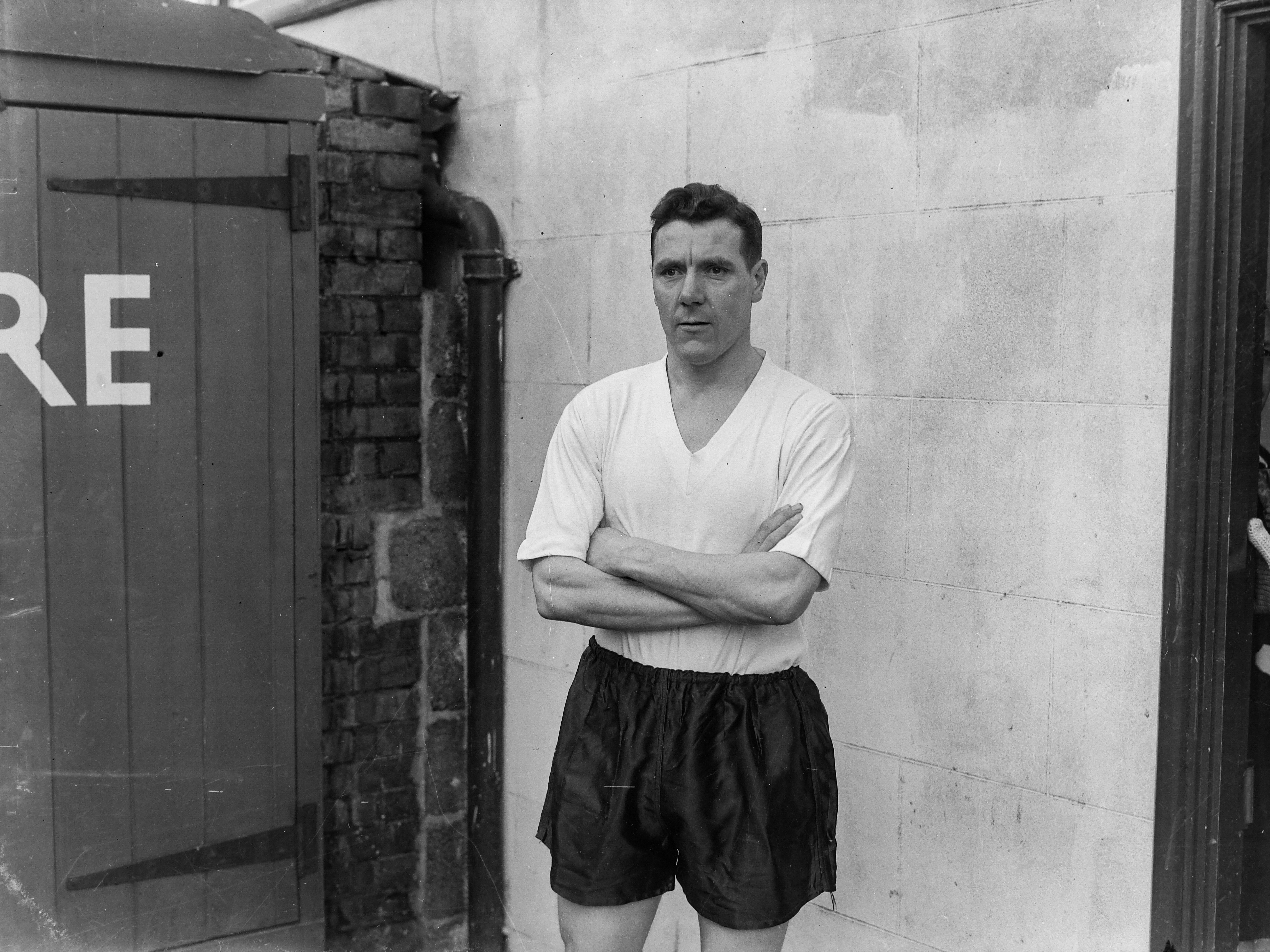
Below: Allan Brown after signing for Luton
Of all the teams that the Hatters could have faced in the FA
Cup Quarter Finals of 1959, it was Brown’s old side, Blackpool. In the first
game at Bloomfield Road Ray Charnley scored at the death for the Seasiders to
level the game at 1-1. The replay at Kenilworth Road would become one of the
ground’s most famous days, with a record crowd of 30,069 crammed into the old
ground on a Wednesday afternoon to see if Luton could reach the FA Cup
Semi-Finals for the first time.
The game was level until the 74th minute, when Brown himself
took on an excellent pass from George Cummins and surged towards goal. In a
remarkable near-repeating of history, Blackpool ‘keeper George Farm dived at the
forward’s feet just as Arsenal’s Jack Kelsey had done in 1953 when Brown broke
his leg. But if Brown suffered any mental scars from that day he didn’t show
it, prodding the ball past his ex-teammate and into the net, for what would be
the winning goal.
‘One man sat motionless, speechless amid the tumult and the shouting in the Luton dressing room as the champagne signalled their victory…he was Allan Brown, the man who had beaten his old club Blackpool…the man who had to beat a nightmare that has haunted him for six years to do it,’ wrote Bob Pennington in his match report.
It would perhaps prove to be the high point of his time at
Luton. The final against Nottingham Forest, reached after defeating Norwich in
the semi-final, was a disappointment for all concerned. Brown had strong
feelings on the subject.
‘We were not keyed up enough to win,’ he would recall in a
1967 interview, ‘I felt lethargic, and this was wrong. I knew the rest of the
lads were the same.’
Even more painfully, he had to contend with missing a chance
that may have turned the game, ‘we were losing 2-1 when it happened. Billy
Bingham broke on the wing and crossed the ball. I threw myself at it but it
went wide. If it had gone in we would have won, for all the lads would have
then pulled out for something extra.’
Brown was now part of an aging side at Kenilworth Road and
would eventually leave for Portsmouth in 1961. But his time in Bedfordshire was
not done by a long chalk. With the club somehow floundering in the bottom
reaches of the 4th Division in November of 1966 they turned to Brown, who had
been in charge at Wigan, to become the new manager.
These were desperate times. In his 7th game in charge they
were beaten 8-1 at bottom side Lincoln and would sink to 23rd in football’s
bottom tier. But in Brown they’d found a manager who would slowly but surely
turn the tide. Helped by the emergence of Bruce Rioch and Alan Slough, he
guided the team to 17th in his first season and then embarked on one of the
most memorable campaigns in the club’s history as Town romped away with the 4th
Division title in 1967/68.
The club also now had a wealthy owner in the form of Tony
Hunt of the V&G insurance group who, along with Reggie Burr, had provided
Brown with sizeable funds to start the Hatters’ revival back up the leagues.
The money was spent wisely, and as soon as promotion was secured to the 3rd
Division plans began for the next steps up the ladder. And in Brown, it was
assumed they had the manager who would do so.
But privately Hunt and Burr saw Allan as a lower division boss,
one who lacked the skills to match their fierce ambition. Brown however had no
doubts in his ability and had set his sights on a 1st Division post as soon as
possible. To that end, he would interview for the job at top flight Leicester
in December of 1968, ultimately missing out to Frank O’Farrell.
The Luton board acted quickly. They declared themselves
unhappy at what they perceived to be a lack of loyalty, and Tony Hunt approached
the out of work Alec Stock as a replacement. Brown was asked to resign, which
he did, surprising the football world and fans alike. The ensuing furore at the
ground left no-one looking in a good light, least of all when Allan leaned out
of his office window to address the gathering press core. ‘If you are waiting here for me I have
nothing to say,’ he told them.
It was sad and acrimonious end to a successful career as
both a player and manager at Kenilworth Road. He would go on to manage Torquay,
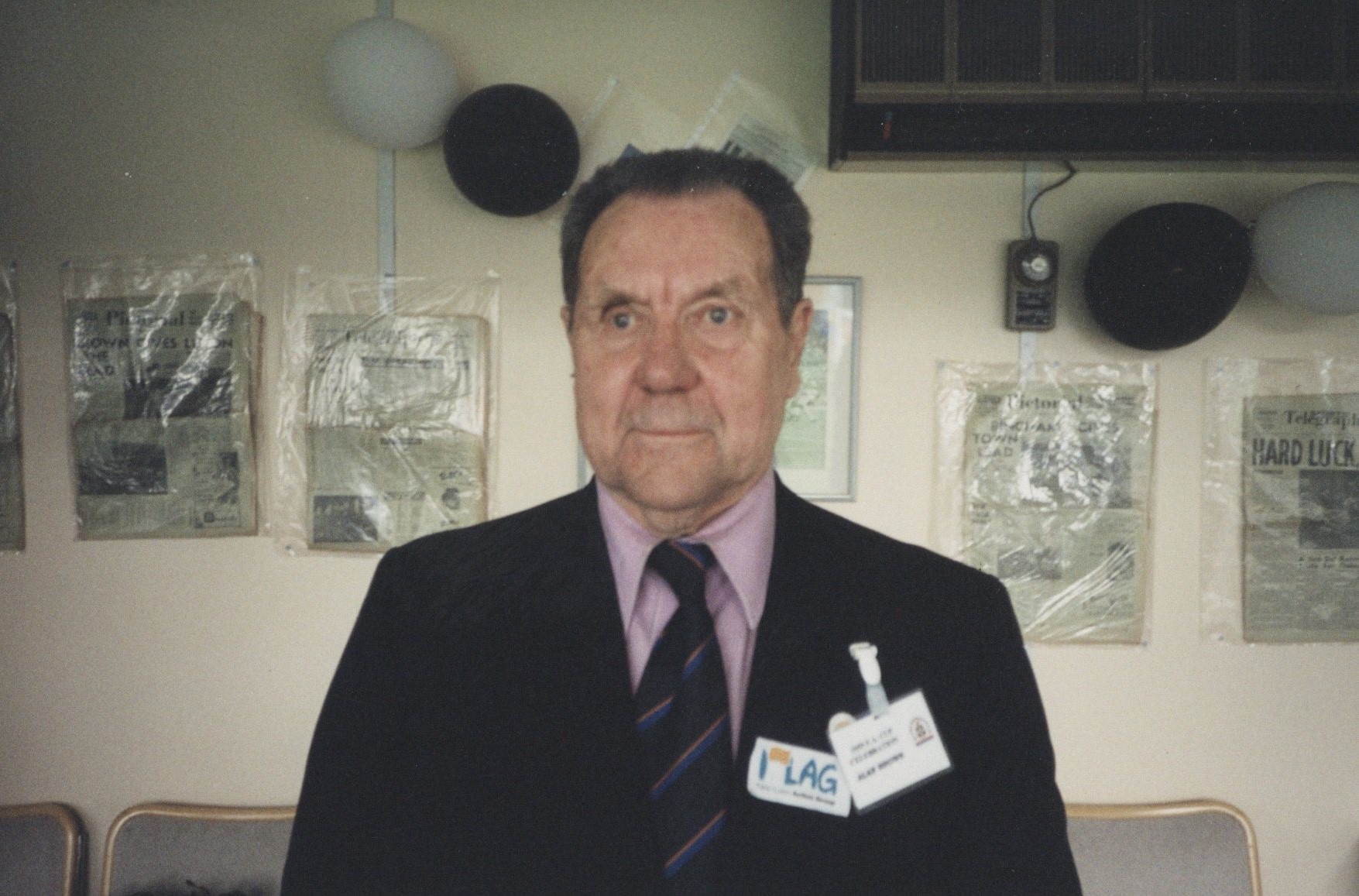
Nottingham Forest and Blackpool among others. But time heals all ills, and he was a popular
guest at celebrations in 1999 to mark 40 years since the run to the FA Cup
Final.
Allan Brown passed away in 2011 at the age of 84. Club
chairman Nick Owen led the tributes. ‘he scored the first goal I ever saw in
professional football. Then, a few years later as manager, he became a pivotal
figure in our resurrection. So many terrific memories – thank you Allan Brown.’
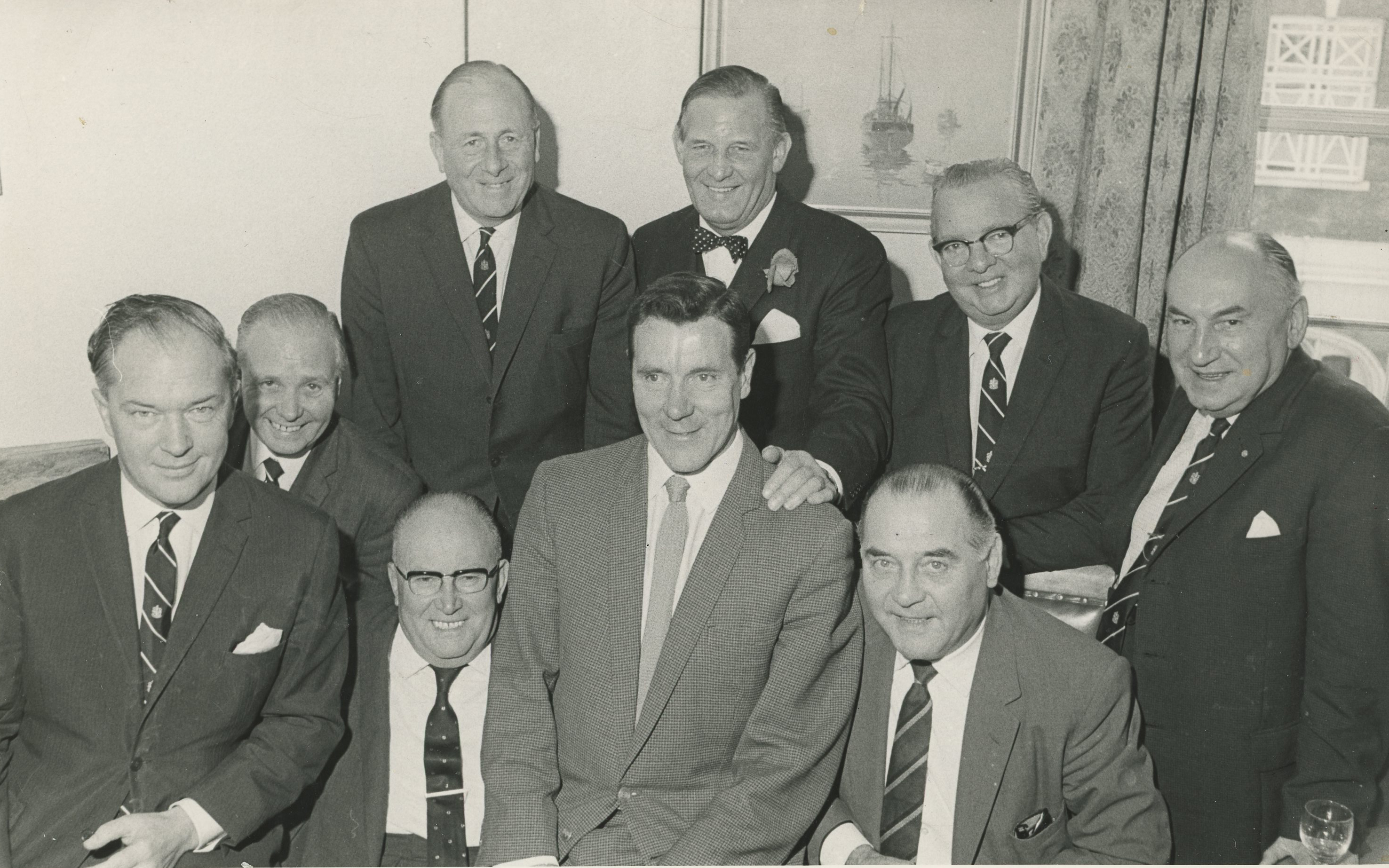
Below: Allan Brown with the Luton directors in happier times, and Allan at Kenilworth Road for the FA Cup reunion in 1999.