founder member and family man
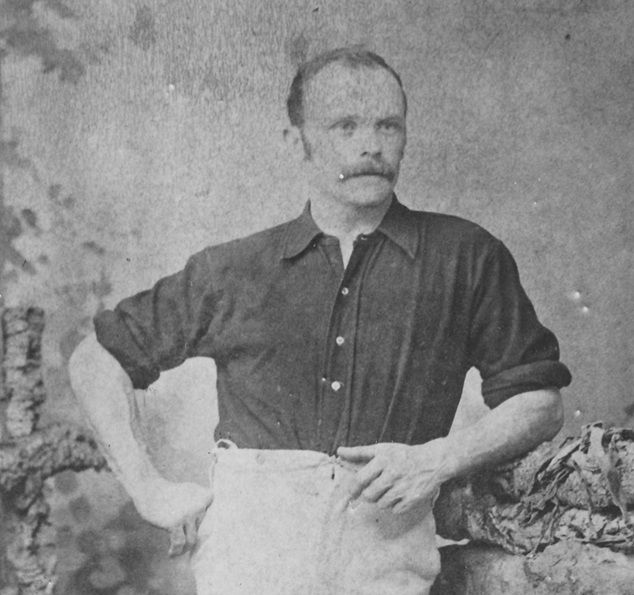
By Will Foster
“Mr Deacon spoke in favour of the proposed formation of the
club and said he had been wanting it for two years. He should feel pleased if
he could see football improve in the town, and thought that if the best team
was put into the field that there were not many towns to beat them” – George
Deacon, 11th April 1885.
The world of 1859 feels incredibly distant in time. Charles
Darwin published the first edition of ‘On the Origin of Species’. Sir Arthur
Conan Doyle was born. Isambard Kingdom Brunel died. In the US, abolitionist
John Brown led a slave rebellion at Harpers Ferry that would be a factor in the
eventual outbreak of Civil War. In London people would hear the chimes of Big
Ben for the first time.
This was the era into which George ‘Chubby’ Deacon was born
on February 14th of that year, the son of William, a blocker, and
Martha, a hat sewer.
It was not a happy home. William was often drunk and abusive
and would leave Martha and the children frightened and hungry. One day it
became too much for George, who anticipating another violent episode, hid
behind a door and knocked his Father unconscious as he walked in. From there George
moved in with Grandparents and resolved to be a better Father than his own had
been.
He married Emma, another hat sewer, in 1878 and was a
founder member of the Luton Wanderers Football Club in 1880 where he terrorised
the opposition on the wing in tandem with J.C. Lomax. Then, after a combined
Luton players side beat a strong Newport Pagnell team in 1883, George first put
forward the idea of creating a club that represented the entire town. It would
take two years before he could see his dream become a reality.
Throughout the 19th century Luton had
significantly outgrown nearby places like Hitchin and Hertford that had been of
similar size at the start of 1800s. The coming of the railway and the
availability of land had attracted the hat making industry and brought wealth
and employment, particulary among women who could find good wages in the sewing
trade. Indeed, they often earned more than their husbands.
It’s no surprise therefore the George Deacon and others felt
the growing town deserved a team that matched its ambition. Finally at the Town
Hall on the 11th April 1885 Gilbert Small put forward the motion
‘that this meeting establish a Town Football club to be called ‘The Luton Town
Football Club”. J.C. Lomax seconded the motion. The club was born.
George was a founder member and served on the club committee
until 1890, at which point players were banned from serving. He was incredibly
consistent from his position on the wing, barely missing a game in those early
years of the club, and was he was particularly noted for his dribbling skills. Small in stature like J.C. Lomax, he was part of the reason for the team
becoming known as the ‘little uns’.
Such was his talent that in November 1891 he attracted a bid
from ‘a notable Birmingham club’ for £3 a week, a signifcant sum at the time.
The Luton News reported Deacon would be staying put, “…Chubby is patriotic, and
filthy lucre will not tempt him to desert his old comrades, whom he has
accompanied to victory so often.’
Sadly he would retire from the playing side of the club a
year later, with age and injury finally starting to catch up with him. He was
awarded a benefit of £8 which the committee was hopeful would rise to nearer
£10 eventually, and his association with the club would continue, first as an
attendant and then as a trainer, where he would work alongside Billy Lawson.
His personal life is a story of great hardship but also
remarkable resilence. He had taught himself read by going to the library but business
problems forced him to file for bankruptcy in 1889. When his beloved wife Emma
died at a young age he was forced to send some of his children to live with
relatives. This must have been particularly painful for George, but he
continued to provide as best he could.
Happier times would follow when he met his second wife,
Emily, at a village fete. Things were still hard financially though. George
would often take a piece of bread and cheese to work, so that men would see he had his
lunch, but then keep the same piece of cheese uneaten until the weekend when he
could share it with his family.
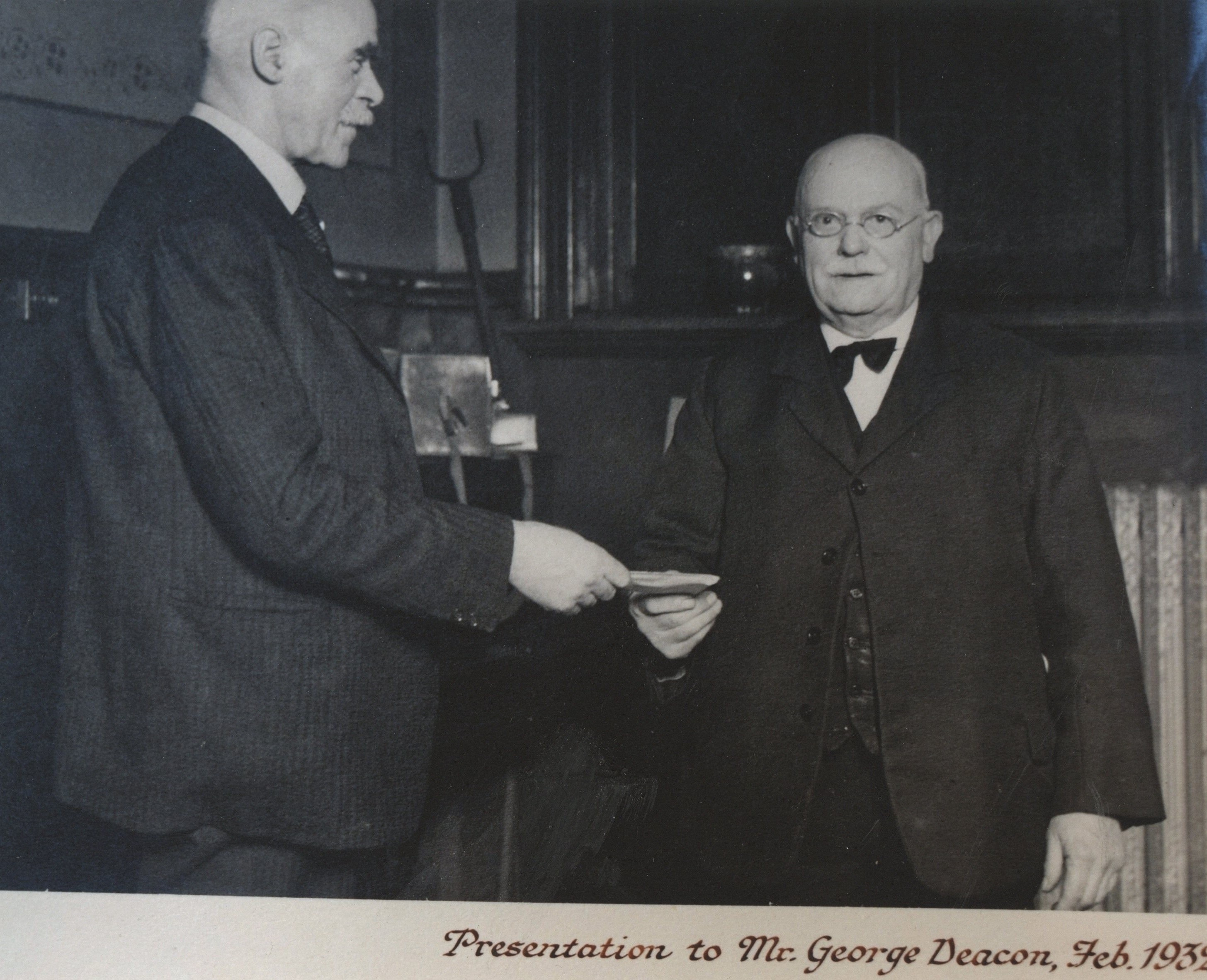
During this time he would work in a number of jobs,
including as a steward at the Liberal Club, where his long service would
eventually be rewarded in a ceremony attended by Luton Town chairman Harry
Arnold. He enjoyed bowls and was featured in a Luton News article in 1939
sitting proudly with his son, grandson and great-grandson. He would spend the
last years of his life living with his daughter after Emily, weakened by
influenza and asthma, had passed away.
George Deacon died in 1943, and is rightfully remembered as
a founder member of Luton Town Football Club, but also as a great player, loyal
servant to the town and a kind and hardworking family man.
If you would like to read more about George and the other remarkable figures involved in the creation of our club then the Straw Plaiters website, from where the vast majority of this information is sourced, is essential reading.
Below: Harry Arnold Liberal Club presentation to George Deacon, 1932.