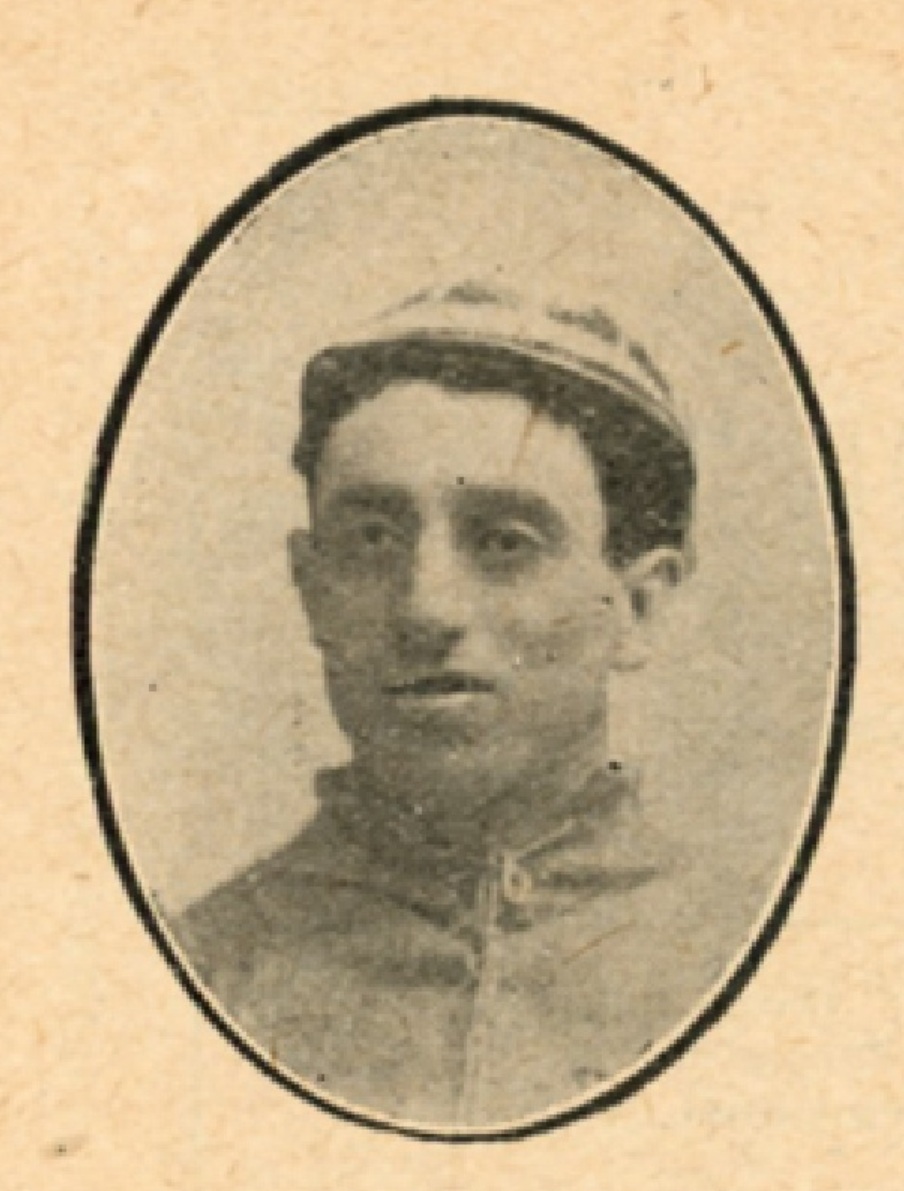
his name was louis buchalter
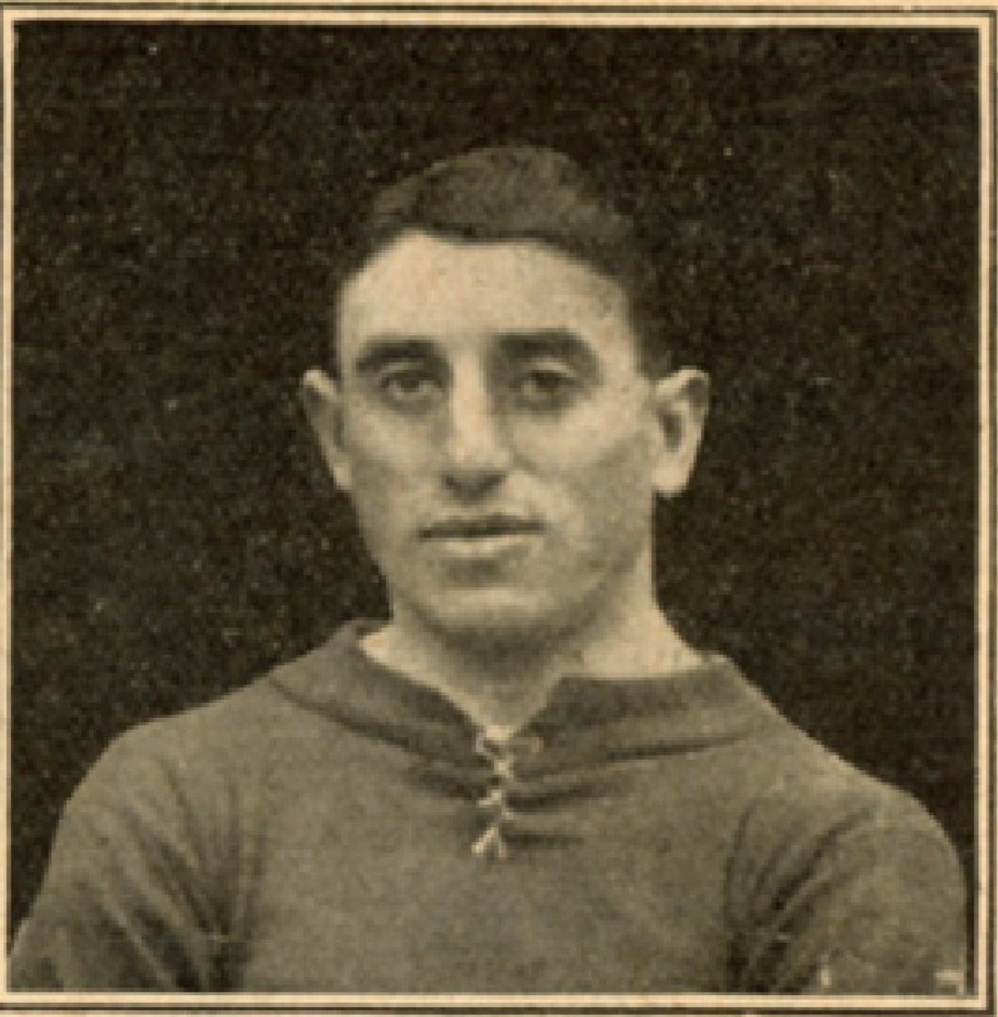
By Will Foster
When Raddy Antic made his debut at West Ham in August 1980
people could have been forgiven for assuming him to be Luton’s first player
born in mainland Europe. It was certainly a trendsetting signing, with Antic
hailing from what is now modern day Serbia and going on to write himself in
Town folkore with ‘that’ goal at Maine Road in May 1983.
But Antic wasn’t the first. Just over 60 years before a
small, quick winger had made his debut in a 2-0 win against Brighton in the
Southern League. His dark colouring made some think him Italian. His name was
Louis Bookman, though he’d once been Louis Buchalter, and his story is
remarkable.
He was born in Lithuania, then part of the Russian Empire,
in 1890, one of nine children in an orthodox Jewish household. When he was
still a boy his Father, Mathias, a Rabbi, made the decision to move the family
to New York to escape the persecution Jews were facing in the region.
The long trip to America by boat was still an arduous one at
the time. A brief stop in Southern Ireland was intended to give the travellers
a measure of respite, but on this occasion the boat was met with fierce gales
when it docked. Amid the heavy winds Mathias mishead the captain’s cry of Cork
and took his family from the ship, thinking they had reached New York already.
They remained in Ireland and would move to Dublin soon
after, at which time they changed their name to Bookman. The talent that Louis
showed for all sports was not welcomed by either parent. The family followed a traditional
Yiddish code which rejected competitive ethos and saw sport as something for
non-Jews only.
Not that this slowed Louis, who won the Under-18 All Ireland
tournament with Jewish side Adelaide in 1908. His skills would land him at
Belfast Celtic, which is where he caught the eye of Bradford City’s legendary manager Peter
O’Rourke, who travelled to Ireland in 1911 searching for an understudy to his
Irish International forward Frank Thompson.
Louis was joining one of the most successful clubs in the
country. O’Rourke’s team had won the FA Cup in the previous season and were
well established in the First Division, boasting some of the best forwards in
the league. Still Bookman made his debut in February 1912 in an FA Cup win
against Chelsea, and then his league debut a week later in a home loss against
Preston.
The significance of his debut is hard to overstate. He was the first Jewish player to play in the Football League and one of the first ‘foreigners’, though his Lithuanian birth was hidden by his Irish accent and upbringing. He was proud of that Irishness and would win a first cap for his adopted country in 1914.
A move to West Brom followed in 1914 but he lasted only a
season before drifting back to Ireland and playing for Glentoran and Shelbourne
during The Great War. Then, in 1919, he caught the eye of Luton, who thought
they could sign Bookman for a free even though he was still contracted to West
Brom, given Southern League sides didn’t have to pay fees to Football League
clubs.
His debut for Luton was therefore delayed as the Baggies
challenged this assumption and demanded a payment. There was worse to come in
the days after he joined, when a couple of 13-year-old boys broke into the club
and stole a number of items, including Bookman’s ‘smallish’ boots. The Police
didn’t take long to find the culprits and marched one of the boys to his place
of work, where he pulled the stolen boots out of their hiding place - two feet
of coal!
Coal-stained boots or not, Louis quickly became a firm
favourite at Kenilworth Road. He was one of the fastest players in the league
and known for his crossing ability. His talents were a huge help as the club
entered the Football League again, with the winger eventually making 110
appearances and scoring 9 times during his spell in a Luton shirt.
One particularly proud moment for both the player and the
club came in 1922 when Bookman and Allan Mathieson were called up for Ireland to
play England, who themselves called up Ernie Simms. It was the first time a
Third Division club had provided three players for an international match.
Ironically, the call up also hastened Bookman’s departure
from Kenilworth Road. With their players missing, the club tried out a new
formation which left the Irish international cast down to the reserves. Unhappy
at this he would eventually fall out with secretary Charlie Green and move to
Port Vale.
He gave up on football not longer after, starting a
watchmaker/jewellery business in Dublin. It also gave him time to focus on his
other love, Cricket, and he would eventually play for Ireland at that too, becoming
one of the rare few to represent their country in multiple sports.
His only daughter Joyce would tell later in life that her
Father was not a great businessman, despite his fierce intelligence. ‘When
people used to come in and say ‘how much do I owe you’, he’d say, ‘ah sure, it
doesn’t matter’. So he never made any money!’
Louis died in 1943 at the age of just 52. His obituary in
the Belfast Telegraph gave a long list of his achievements but perhaps its
final line is the most affecting. It reads simply, ‘his name was Louis
Buchalter.’